QR Code Generator
SaaS Platform for Dynamic QR Codes & Branded Web Pages
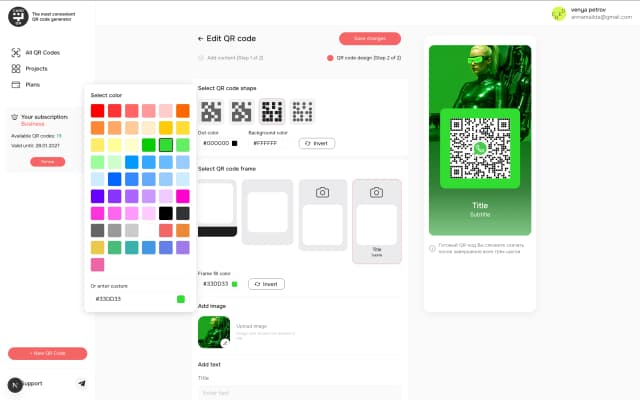
A SaaS web app for creating and managing dynamic QR codes linked to live web pages. Users can build, publish, and update content from a personal dashboard.
Each QR links to a public page that can be updated without changing the QR. The app includes sign-up, auth, plans, usage limits, project organization, and public page rendering.
Product Functionality
Content and Web Page Builder
Users create pages with modular blocks: text, links, sections, and contact info. Pages publish to public URLs (/w/[qrId]) without login. Updates happen from the dashboard, so QR codes stay valid.
QR Code Generation and Custom Design
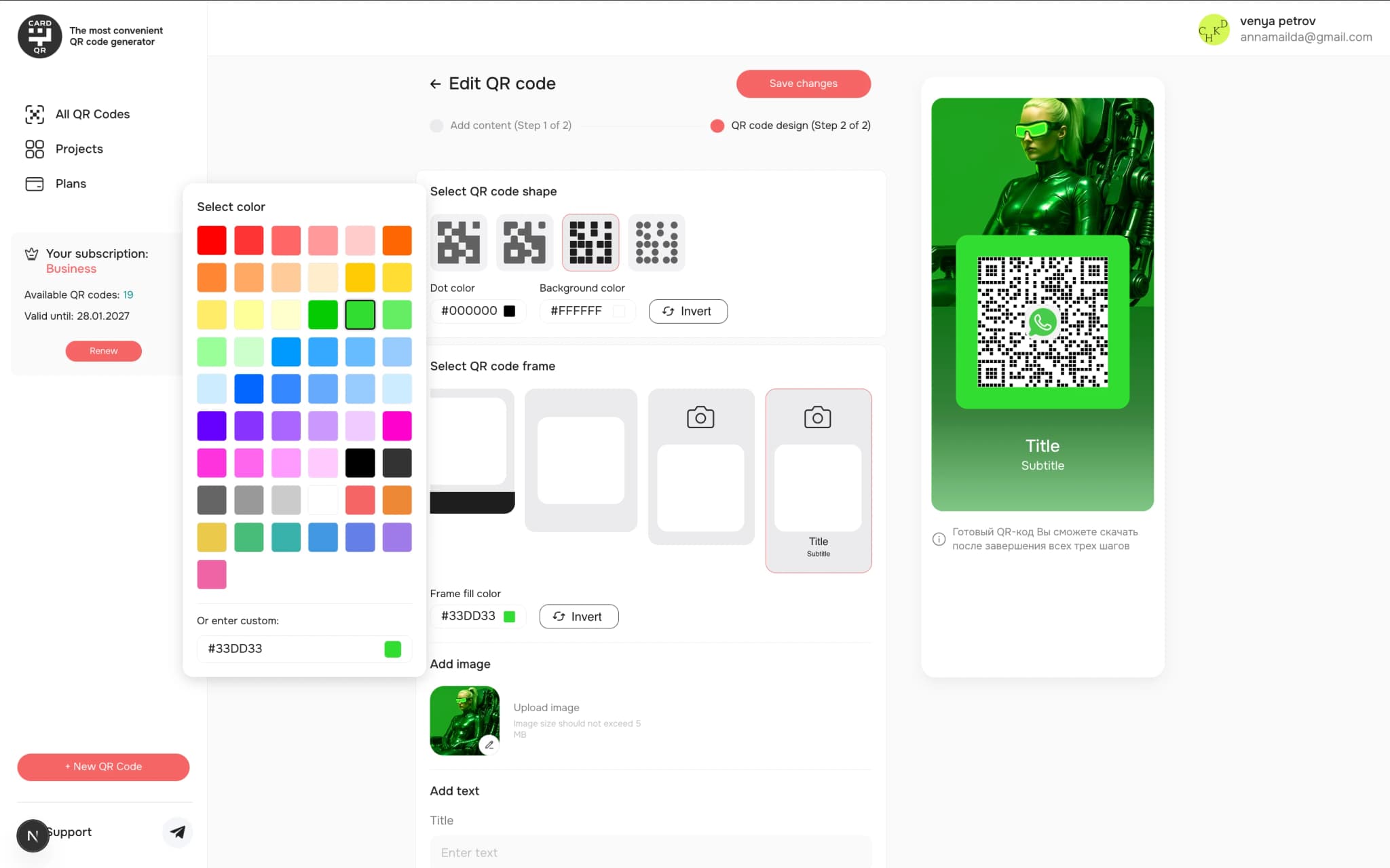
Create QR codes for profiles, promos, and campaigns. Customize colors, shapes, and styles. Branded QR codes match visual identity without breaking functionality.
User Dashboard
The dashboard manages projects and QR codes with list, filter, edit, and update tools. Users can manage profiles, subscription status, features, and limits in one place.
Subscriptions and Feature Limits
Plan-based access controls limit QR codes and features. Upgrades, downgrades, and access rules are handled consistently.
Technical Architecture and Stack
Built with Next.js 16 (App Router), React 19, TypeScript, React Query, Axios, React Hook Form + Zod, and SCSS Modules.
Architecture Structure
Layered structure: app/ for routing, features/ for domain logic, shared/ for UI and infra. Strict import boundaries keep concerns separated.
API Layer
A centralized Axios client handles requests, errors, token refresh, and race-condition protection.
Authentication
JWT auth with access tokens in memory and refresh tokens in configurable storage. Auto refresh keeps sessions stable.
State and Data Management
React Query handles caching, invalidation, and network errors with centralized query keys.
UI System
UI uses SCSS Modules and design tokens for consistent styling and scalable components.
Positioning
This is not a static QR generator. Each QR links to a managed live page. Users control content and access while the QR stays stable. The platform is built for long-term use.
What We Delivered
- Full-stack SaaS application with user authentication and subscription management
- Dynamic QR code generation with custom design options
- Modular page builder for creating and managing web pages
- Public page rendering system with dynamic content updates
- User dashboard with project and QR code management
- Plan-based feature limitations and subscription workflows
- Structured architecture with clear separation of concerns
- Production-ready codebase with modern React patterns
Result
Users can create, customize, and manage dynamic QR codes with live pages in a simple interface.
The structured architecture makes it easy to add features and scale as needs grow.